Quick Answer: Yes hydro jetting is safe for old pipes when the line is structurally sound and pressure is correctly controlled, but it’s risky for brittle, cracked, or severely corroded pipes. The safest approach is confirming pipe condition with a sewer camera inspection, choosing the right nozzle, and using a lower PSI with multiple passes instead of one aggressive blast. If the line is clay, damaged cast iron, or has weak joints, hydro jetting can worsen cracks or trigger a break. When in doubt, verify first, then pick the cleaning method that matches pipe material, access points, and clog type.
When Hydro Jetting Is Safe vs. When It’s Not
It depends more on condition than age. An older pipe that’s intact can handle cleaning; a newer pipe with joint issues can fail.
You’re dealing with a high-pressure water stream similar to a pressure washer comparison so it’s not the age on paper that matters, it’s whether the pipe can take controlled force without splitting.
To keep the risk low, remember this: hydrojetting old pipes fixes drainage issues only when the line has enough integrity to be cleaned without pushing a weak spot over the edge.
How Hydro Jetting Works (and why old lines need extra caution)
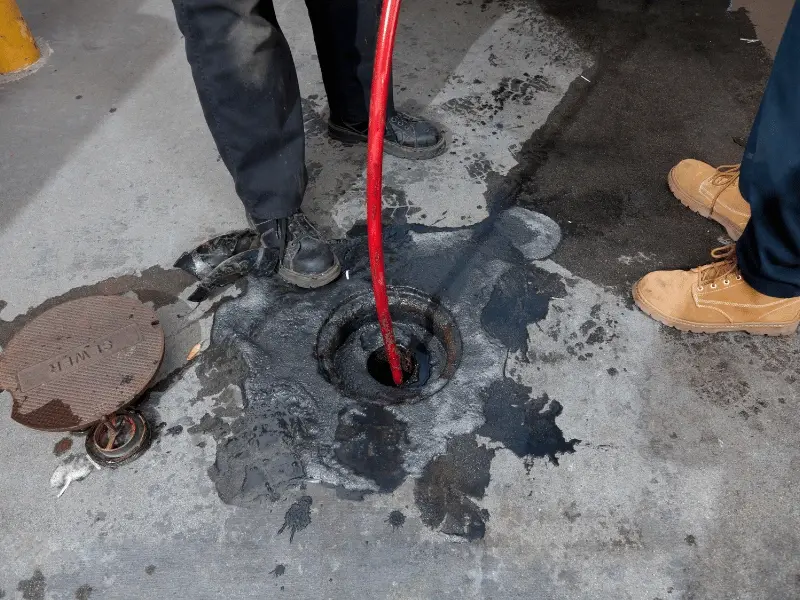
Hydro jetting uses a hydro jetting machine to push a high-pressure water stream through the sewer line, scouring buildup from the interior pipe walls. The operator feeds a flexible hose through an access point, and a nozzle / hydro jet nozzle sprays forward and backward jets to break up clogs and wash debris out.
Some systems run around PSI (e.g., 4,000 psi) for typical main line cleaning, though equipment can go much higher. What matters is what the plumber actually sets based on your pipe condition assessment.
Inside the line, hydro jetting targets:
- grease / fat / solidified grease
- sludge and debris
- limescale / mineral buildup (hard water)
- silt / sand, hair, and food particles
- tree roots / root intrusion
This is why hydro jetting is safe for old pipes is a real question. Old and brittle pipes can already have cracks or weak joints hiding under buildup.
Why a Sewer Camera Inspection Should Come First
A sewer camera inspection (also called video inspection / real-time video feed) shows the truth before you introduce pressure. It helps identify leaks, cracks, or weak spots, offsets, bellies, corrosion, and root intrusion all of which change the safest plan.
This is where reliable sewer camera inspection experts matter, because the footage isn’t just “nice to have.” It decides whether hydro jetting is safe or whether a drain snake / plumber’s snake or rooting machine / auger (rooter service) is smarter.
Tip: If the camera shows flaking metal, separated joints, or crumbling clay, don’t “test it anyway.” That’s where damage happens.
Fast Warning Signs You Can Spot During a Walkthrough
Before any machine goes in, the building or home usually gives clues. If you’re asking if hydro jetting is safe for old pipes, start by identifying whether the issue is a slow-drain buildup problem or a structural pipe problem.
Common Symptoms that Suggest a Major Clog
- Repeated slow drains in multiple fixtures
- Clogged sewer line / major clog backups after heavy use
- Gurgling sounds, sewage odor, or intermittent drain stops
- Overflow at a cleanout after laundry or showers
- Recurring blockages even after snaking
If backups are severe and constant, the pipe may be holding a thick clog / heavy blockage, and jetting it too early can create backflow problems.
Access Points Matter: Cleanout, Roof Vent, or Pulling a Toilet
Hydro jetting usually requires a sewer cleanout (cleanout access). In many homes, the cleanout is outside; in older properties, an older home without cleanouts may force alternative entry.
Common access routes include:
- the sewer cleanout
- a plumbing vent stack (roof vent)
- removing a toilet (alternate access)
If access is limited, the operator may need to work farther through bends, which increases stress on old joints. That’s why hydro jetting is safe for old pipes is partly an access question, not just a pipe-material question.
Pipe Material Guide: Clay, Cast Iron, PVC, and Mixed Systems
The safest method changes based on what you have in the ground.
Clay Pipes
Clay pipes are often fragile with age and shifting soil. If the camera shows cracks, jetting can expand them. If clay is intact, a cautious approach may work, but it’s never “automatic.”
Cast-Iron Pipes
Hydro jetting cast iron pipe can be safe if the pipe walls are stable, but corrosion / rust buildup can create thin spots. Jetting can also dislodge flakes that move downstream and form a secondary blockage.
PVC Pipes
PVC pipes generally handle jetting well, but joint issues / degradation can still be a problem. If the camera shows separated joints, pressure can worsen the gap.
Safety Snapshot by Pipe Material:
Pipe type | When jetting is usually safe | When to avoid jetting |
PVC pipes | Intact joints, no deformation | Loose joints, misalignment, damage |
Cast-iron pipes | Solid walls, limited corrosion | Severe corrosion, thin walls, fractures |
Clay pipes | Rarely safe unless pristine | Cracks, offsets, brittle sections |
Mixed materials | Possible with careful pressure | Unknown transitions or weak couplings |
What Hydro Jetting Removes Best (And What it Struggles With)
Hydro jetting is excellent for greasy buildup and roots, and it can thoroughly clean pipe walls compared with snaking which may punch a hole and leave residue.
It’s commonly used for:
- grease / fat deposits
- limescale / mineral buildup
- silt / sand from line intrusion
- sludge and debris coating interior pipe walls
- tree roots / root intrusion when the pipe isn’t already damaged
But it can struggle with thick clogs made of solids like wipes or hygiene products. In those cases, a rooting machine / auger (rooter service) may be needed first to open flow, followed by jetting.
The Real Risks: How Hydro Jetting Can Damage Old Pipes
Here’s the honest part: is hydro jetting safe for old pipes is “yes, but not always.”
Hydro jetting can cause problems when:
- The pipe is old and brittle pipes with existing cracks
- The operator uses too much PSI too fast
- The nozzle selection is wrong (too aggressive for the line)
- The hose is forced through bad joints or offsets
- Corrosion has already thinned the pipe wall
The most common outcomes of “unsafe jetting” are:
- worsened leaks
- widened cracks
- joint separation
- sudden collapses in weak clay or badly corroded cast iron
Step-by-Step: How Pros Make Jetting Safer on Older Pipes
If you want hydro jetting safe for old pipes to be a confident “yes,” the process needs to be controlled.
Safe Hydro Jetting Checklist
- Do a sewer camera inspection to confirm pipe condition assessment.
- Identify the clog type (roots, grease, limescale, solids).
- Choose the right nozzle and start with a gentle pass.
- Use pressure regulation / lower pressure setting first.
- Make multiple passes instead of one high-force blast.
- Flush debris toward the municipal sewer main safely.
- Re-camera the line to confirm cleaning and check for damage.
This is exactly why you want best hydrojetting technicians; the method is only as safe as the person running the machine.
Nozzle Types and Why They Matter in Old Lines
Nozzles aren’t one-size-fits-all. Some are designed to cut, others to wash, and some to penetrate thick clogs.
Older lines often do better with controlled cleaning nozzles first. Aggressive penetrator-style jets can be risky if the pipe wall is already weak.
Tip: If the camera shows rough cast iron and heavy scale, a staged cleaning approach reduces the chance of sending big chunks downstream that form a new clog.
Quick Fixes Before You Decide to Jet
You can reduce risk and avoid emergency backups with a few smart steps while you’re planning.
Quick fixes (use naturally):
- Stop pouring grease / fat into drains; it hardens into solidified grease.
- Use strainers to reduce hair and food particles entering the system.
- If the line is backing up, limit water use until the clog is assessed.
- Schedule cleaning before a full blockage becomes a thick clog / heavy blockage.
These won’t replace professional cleaning, but they can prevent a minor issue from turning into a flooded bathroom.
Hydro Jetting Pipe Cleaning vs. Snaking vs. Rooting Machine
Choosing the right method prevents wasted time and accidental damage.
- A drain snake / plumber’s snake often clears a path through a clog but may leave buildup on pipe walls.
- A rooting machine / auger (rooter service) is strong for drilling through solids and cutting some roots, but it may not fully clean the line.
- Hydro jetting pipe cleaning scours interior pipe walls, removing residue and restoring diameter.
If you’re still unsure which method fits your situation, understanding the difference between snaking and hydro jetting a drain can clarify the decision. While snaking often creates a pathway through a clog, hydro jetting cleans the full pipe diameter and removes buildup along the pipe walls. That distinction becomes especially important when evaluating older systems.
Which Method Matches which Problem
Problem Type | Best First Tool | Why |
Grease + sludge coating | Hydro jetting | Removes buildup from pipe walls |
Roots in stable pipe | Hydro jetting | Clears root intrusion + washes debris |
Thick solids clog | Rooting machine | Drills through heavy blockage |
Unknown condition / old line | Camera inspection first | Avoids worsening existing damage |
Spot clog near fixture | Drain snake | Fast access, limited disruption |
Special Scenarios: Storm Drains, Commercial Lines, and Long Runs
Hydro jetting isn’t only for sewer lines. Some properties use it for cleaning out storm drains where silt and sand collect after heavy rain.
Long commercial runs often benefit from routine maintenance, but older pipe sections still require inspection first especially at transitions between materials.
Also, in some setups, water jetting pipe techniques are used for maintenance cleaning where a lower pressure setting and repeated passes are safer than a single aggressive run.
How Often Should You Jet an Older Sewer Line?
If your pipe is confirmed stable, preventative cleaning can reduce recurring clogs. Many professionals suggest annual or every 1-2 years depending on root intrusion, grease load, and hard water scale.
But don’t “auto-jet” without inspection. An old line can deteriorate between cleanings, especially if corrosion accelerates.
Cost Factors and What Changes the Price
Cost varies based on:
- access (cleanout vs roof vent vs pulling a toilet)
- length of sewer line
- clog severity (roots vs solids)
- need for camera inspection
- pipe material and risk level
Tip: Paying for inspection first often reduces overall cost by preventing wrong-method attempts.
If budget is a concern, choose an affordable plumbing company that still insists on inspection-driven decision making. Cheap jetting on unknown clay can become expensive fast.
Call DR HOUSE INC for Safe Drain and Sewer Cleaning
If you’re dealing with slow drains, recurring sewer backups, or root problems, DR HOUSE INC can help you choose the safest cleaning method based on real inspection evidence not guesswork.
Company Name: DR HOUSE INC
Contact Number: 8587037536
FAQs About Hydro Jetting Old Pipes
Is hydro jetting safe for old pipes if they’re cast iron?
If old pipes are made of cast iron when the walls are stable and corrosion is limited. A camera inspection is the safest way to confirm it won’t worsen weak spots.
What PSI is typically used for sewer line hydro jetting?
Many jobs reference around 4,000 PSI for main lines, but the correct PSI depends on pipe condition, material, and clog type. Older pipes often require lower settings and multiple passes.
Can hydro jetting remove tree roots completely?
It can break up and flush many roots, but if root intrusion has already damaged the pipe, jetting can make the problem worse. Inspection determines what’s safe.
What if my home has no cleanout?
Access may be through a roof vent or by removing a toilet. Limited access can increase stress on old joints, so inspection and pressure control are even more important.
What’s the safest first step if my sewer line keeps clogging?
Start with a sewer camera inspection to assess pipe condition and identify the clog type. Then choose the safest cleaning method.