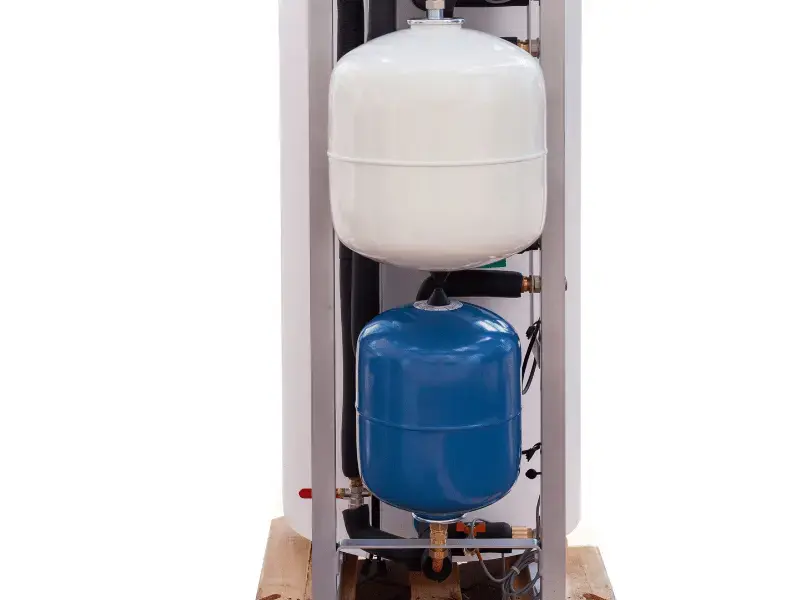
Quick Answer: The purpose of expansion tank on water heater is to control pressure created by thermal expansion when stored water is heated inside a closed plumbing system. As water heats up, its volume increases, and without an expansion tank, this excess pressure has nowhere to go. An expansion tank absorbs the expanded water and stabilizes system pressure. This protection helps prevent leaks, pressure relief valve discharge, pipe damage, and premature water heater failure.
What Is a Water Heater Expansion Tank?
A water heater expansion tank is a small pressurized tank installed on the cold water supply line, typically near the water heater. It is designed to manage pressure changes caused by heating water in tank-type (storage tank) water heaters.
Inside the tank are two chambers: an air chamber and a water chamber, separated by a rubber diaphragm or rubber bladder. This internal design allows the tank to absorb pressure safely without releasing water into the plumbing system.
How Thermal Expansion Creates Pressure in Water Heaters
Thermal expansion occurs when water is heated and its molecules spread out, increasing volume. When water heats from roughly 40°F to 212°F, it can expand by nearly 4%, which is significant in a confined space.
In older homes with an open plumbing system or open-loop system, this expanded water could flow back toward the municipal water supply. Modern plumbing systems, however, include safety devices for contamination prevention and backflow protection purpose, which block this reverse flow.
These devices include:
- Check valves
- Backflow prevention devices
- Pressure-reducing valves (PRVs)
When these are present, the home becomes a closed plumbing system or closed-loop system, trapping expanded water and causing pressure buildup.
The Purpose of Expansion Tank on Water Heater
The purpose of expansion tank on water heater is to absorb the expanded water volume created during heating and maintain pressure regulation within a safe pressure range.
Without pressure relief, expansion stress transfers to vulnerable plumbing components, including:
- Supply pipes
- Pipe joints and fittings
- Plumbing fixtures
- Internal seals and gaskets inside the water heater
Over time, repeated pressure spikes increase water heater failure risk and reduce appliance lifespan.
When an Expansion Tank Is Required
An expansion tank is typically required when thermal expansion cannot escape the plumbing system.
Situations That Commonly Require an Expansion Tank
- New water heater installation under local plumbing codes
- Homes with PRVs or backflow devices
- Closed plumbing systems under California Plumbing Code
- Repeated pressure relief valve dripping
- Static water pressure approaching or exceeding 80 PSI
Plumbing Specialists can evaluate system pressure and determine if expansion tank is required.
What Happens If a Water Heater Has No Expansion Tank
Without expansion control, pressure seeks the weakest point in the system. This often results in:
- T&P relief valve discharge
- Gradual leaks at fittings
- Water hammer and banging/knocking noises
- Damage to plumbing fixtures
- Accelerated wear of the water heater tank
This stress may not cause immediate failure but leads to costly repairs over time. That’s why early evaluation by Water Heater Repair Specialists can prevent major damage.
Common Signs an Expansion Tank Is Needed
Warning Signs to Watch For
- Frequent relief valve discharge after heating cycles
- Sudden fluctuations in water pressure
- Noticeable reduced water pressure on hot lines
- Moisture or rust/corrosion on the tank
- Persistent water hammer noises
These symptoms often indicate waterlogging, internal diaphragm wear, or improper precharge pressure.
How an Expansion Tank Works Step by Step
Pressure Absorption Process
- Water heater heats stored water
- Water expands, increasing system pressure
- Expanded water enters the expansion tank
- Diaphragm compression absorbs pressure
- Pressure equalizes throughout the system
- Water returns to the heater when demand drops
This cycle allows pressure equalization without releasing water or stressing plumbing components.
Expansion Tank Sizing and Pressure Matching
Correct sizing depends on heater capacity and incoming pressure.
Key Sizing Factors
Factor | Why It Matters |
Water heater size (gallons) | Larger tanks create more expansion |
Static water pressure | Higher pressure needs larger expansion capacity |
Temperature rise | More heat = more expansion |
Closed system devices | Trap pressure |
Improper sizing reduces effectiveness and increases failure risk.
Precharge Pressure (Often Overlooked)
The tank’s air charge must match the home’s static pressure. If mismatched, the tank cannot function properly.
Precharge Effects
Precharge Condition | Result |
Too low | Tank waterlogs quickly |
Correct | Stable pressure control |
Too high | Pressure spikes persist |
This adjustment is best handled by Plumbing Experts, especially during new installations.
Where an Expansion Tank Should Be Installed
Expansion tanks are installed on the cold water supply line, close to the water heater. Proper support is essential to prevent strain on pipes and fittings.
Incorrect placement or lack of support can contribute to:
- Pinhole leaks
- Condensation buildup
- Premature corrosion
Temperature Settings and Expansion Pressure
Higher water heater temperatures increase expansion pressure. As temperature rises, water expands more aggressively, increasing internal pressure. This is why setting above the water heater recommended temperature increases the workload on the expansion tank.
Maintenance, Lifespan, and Failure Causes
Expansion tanks typically last 5 to 10 years with proper maintenance.
Common Failure Causes
- Rubber bladder deterioration
- Excessive pressure
- Internal corrosion
- Poor installation practices
- Lack of annual inspection
Annual inspections help catch issues early and maintain reliable pressure control.
Protect Your Water Heater System With DR House INC
If you’re experiencing pressure issues, relief valve discharge, or installing a new water heater in Chula Vista, DR HOUSE INC can help ensure your system is safe, compliant, and protected.
📞 Call DR HOUSE INC Today
Phone: (858) 703-7536
Putting It All Together: Why Expansion Tanks Matter
The purpose of expansion tank on water heater is long-term system protection. By managing pressure caused by thermal expansion, it safeguards pipes, valves, fixtures, and the water heater itself.
Frequently Asked Questions About Purpose of Expansion Tank on Water Heater
Can an expansion tank reduce long-term plumbing repair costs?
Yes. By minimizing pressure stress, expansion tanks reduce wear on fittings, valves, and the water heater, lowering repair frequency.
Does an expansion tank affect water temperature?
No. It only manages pressure and does not alter heating performance or water temperature.
Can high water pressure shorten expansion tank life?
Yes. Excessive static pressure accelerates bladder wear and internal corrosion.
Is condensation on an expansion tank normal?
Light condensation can occur, but persistent moisture may indicate waterlogging or failure.
Should expansion tanks be replaced proactively?
If a tank is near the end of its lifespan or shows early failure signs, proactive replacement prevents pressure-related damage.